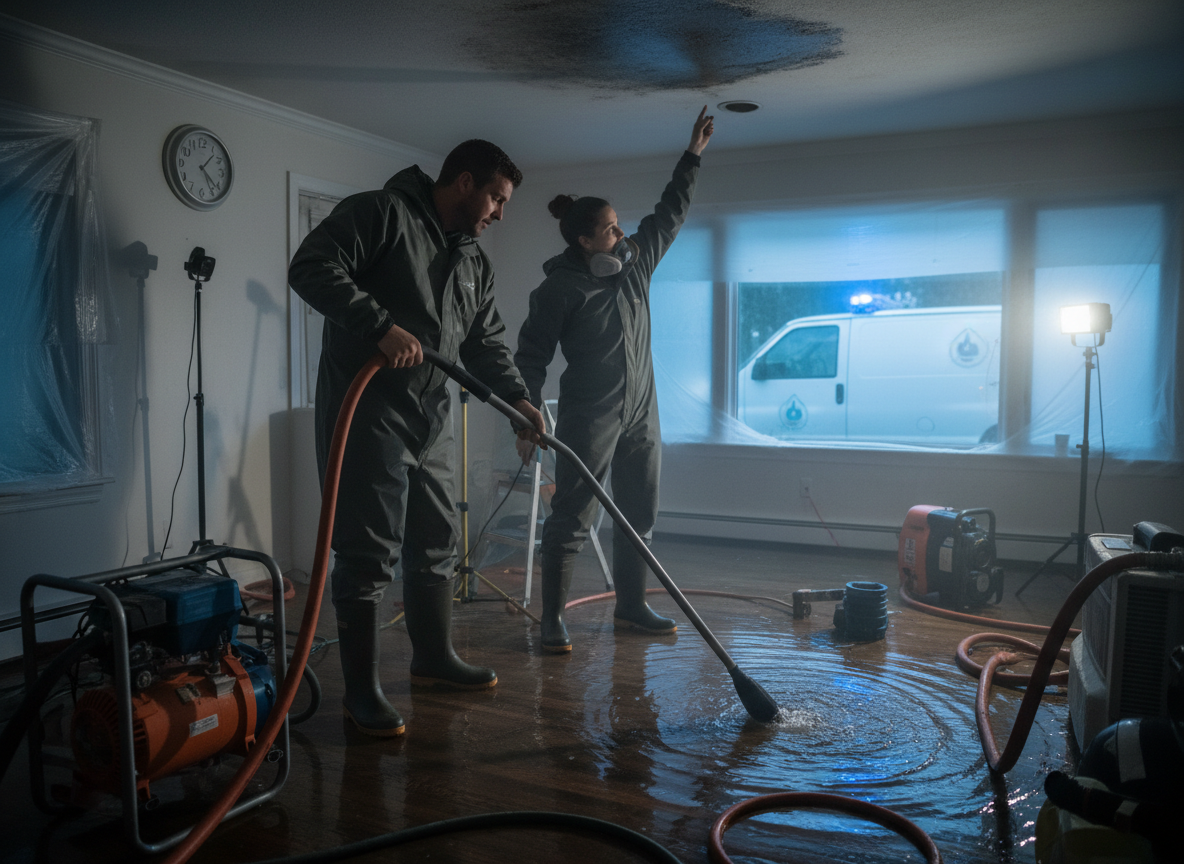
Camano Island homes, many built decades ago on sloped lots near the Sound, often hide water intrusion under crawl spaces and behind cedar siding. When a pipe bursts or heavy winter rain overwhelms gutters, moisture travels quickly through the island’s sandy soils and into older floor joists. Technicians arriving within hours must first locate the source, then extract standing water before it reaches the particleboard subfloors common in 1970s and 1980s construction.
Island County building practices from earlier eras left many residences without modern vapor barriers. That detail changes every job: once water reaches insulation, crews remove wet material in sections rather than whole rooms to limit demolition. On waterfront streets, tidal influence can push groundwater back into foundations hours after the initial event, requiring repeated extraction visits that mainland crews rarely encounter.
After drying, crews check for hidden mold in the tight crawl spaces typical of Camano homes. Dehumidifiers run longer here because the marine air stays damp even after the visible water is gone. Homeowners who skip the final moisture mapping often see recurring stains on baseboards the following spring.
Technician insight
In Camano Island, the thing that catches most people out with 24-hour water restoration near me is how quickly water travels under the older raised-floor homes when rain hits the clay pockets near the shoreline. Homeowners often stop at the visible puddle in the utility room and miss the saturation already moving toward the septic lines.
Burst Supply Line Under 1980s Rambler
A supply line split beneath the kitchen of a Camano home during a January freeze. Water traveled along the joists into the crawl space and reached the laundry area before anyone noticed. Crews extracted standing water, removed wet insulation, and ran drying equipment for four days until moisture readings stabilized across the sandy soil under the foundation.
How it works
- 1
Emergency Call Intake
Dispatch takes details and confirms arrival window while crews roll from the Sunrise Blvd shop.
- 2
On-Site Assessment
Technicians trace the water path through the home’s specific construction, noting crawl space access and any septic proximity.
- 3
Water Extraction and Drying
Pumps and air movers remove moisture; equipment stays until readings match dry standards for the island’s climate.
- 4
Final Moisture Mapping
Infrared scans and pin meters confirm hidden pockets are gone before any reconstruction begins.
Pricing
Pricing depends on water volume, affected square footage, and whether hidden crawl-space work is required; upfront quotes provided on site.