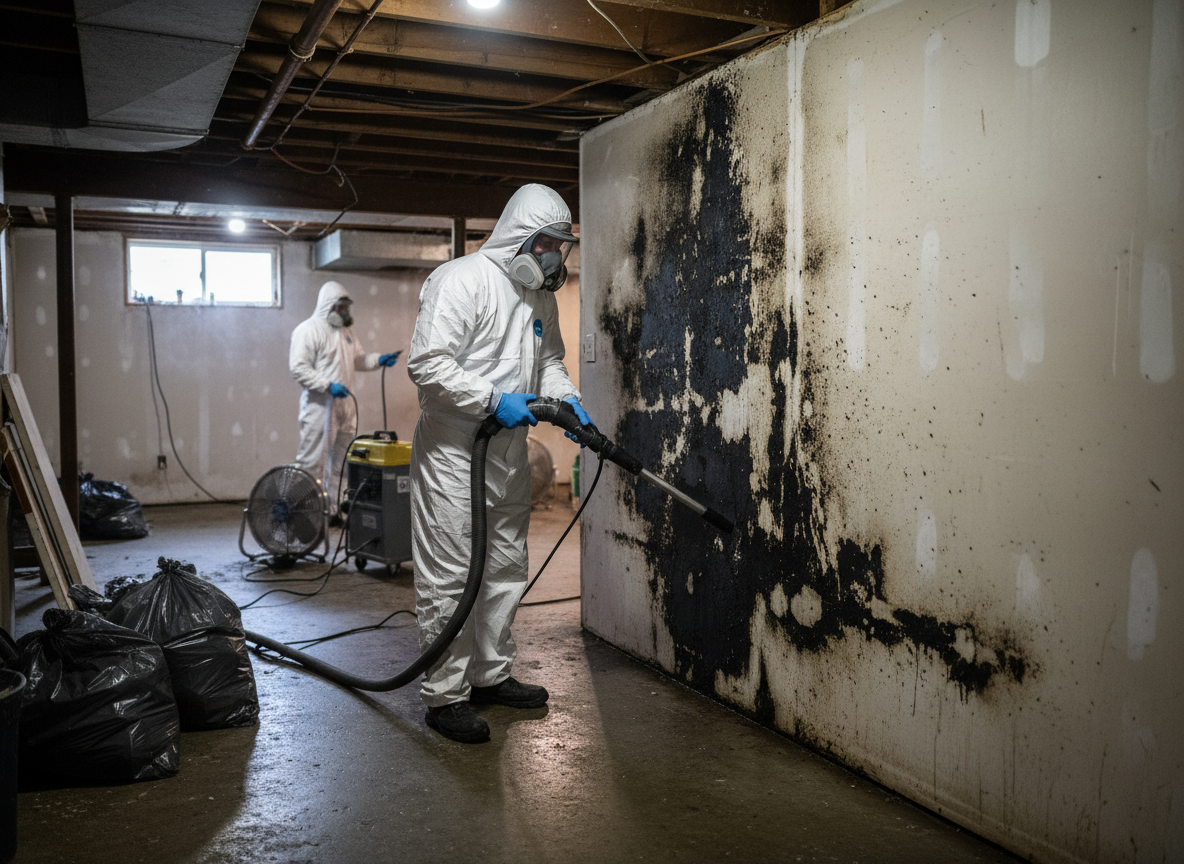
Camano Island homes often sit on crawl spaces or slabs built before modern moisture barriers, so water intrusion from heavy Pacific Northwest rains quickly feeds mold behind baseboards and under flooring. After extraction, we use moisture meters and thermal imaging to locate pockets that standard drying misses, then apply EPA-registered antimicrobials only where growth has taken hold. Island County building practices from the 1970s and 1980s left many properties with inadequate ventilation, turning seasonal storms into long-term mold issues that require full containment to keep spores from spreading to living areas.
Water from roof leaks or foundation seepage on the island’s sloping lots travels along joists and settles in insulation, creating conditions where black mold and other species thrive within 48 hours. We remove and dispose of saturated materials rather than simply treating surfaces, then run commercial dehumidifiers and air scrubbers until relative humidity in the affected cavities drops below 50 percent. Homeowners near Camano’s eastern shoreline face additional salt-air corrosion on HVAC components, which can reintroduce moisture if not addressed during the remediation sequence.
Clearance testing with independent air sampling confirms spore counts have returned to outdoor baselines before we release the space. Because Camano properties frequently lack easy equipment access, we stage containment barriers and negative-air machines through side doors or garage entries to avoid tracking contaminants through finished rooms. This approach prevents cross-contamination that commonly occurs when remediation crews skip proper isolation on smaller island lots.
Technician insight
In Camano Island, the thing that catches most people out with Mold remediation after water damage is how quickly rain soaks into the crawl spaces of 1970s and 1980s homes that never had proper vapor barriers; once the rains hit, moisture travels along the joists and you end up chasing mold two rooms away from the original leak.
Crawl-space mold after roof leak
A Camano Island homeowner noticed musty odors after a winter storm. We found standing water had wicked into insulation under the master bedroom floor. After mapping moisture through the joists we removed the saturated material, treated the framing, and ran drying equipment until readings dropped below 15 percent. Clearance samples passed and the family moved back in without further odor issues.
How it works
- 1
Inspection and Moisture Mapping
Technicians document visible damage and use meters to trace hidden moisture through walls and floors in Camano Island homes.
- 2
Containment Setup
Plastic barriers and negative air machines isolate the work zone to keep spores from migrating to unaffected areas.
- 3
Removal of Affected Materials
Saturated drywall, insulation, and flooring are cut out and bagged for disposal following local waste guidelines.
- 4
Antimicrobial Treatment and Drying
EPA-registered products are applied, followed by industrial drying until moisture levels meet restoration standards.
- 5
Clearance Testing
Independent air samples verify mold levels before the space is returned to normal use.
Pricing
Cost depends on square footage affected, depth of hidden growth, and access constraints typical of Camano Island crawl spaces and older construction.