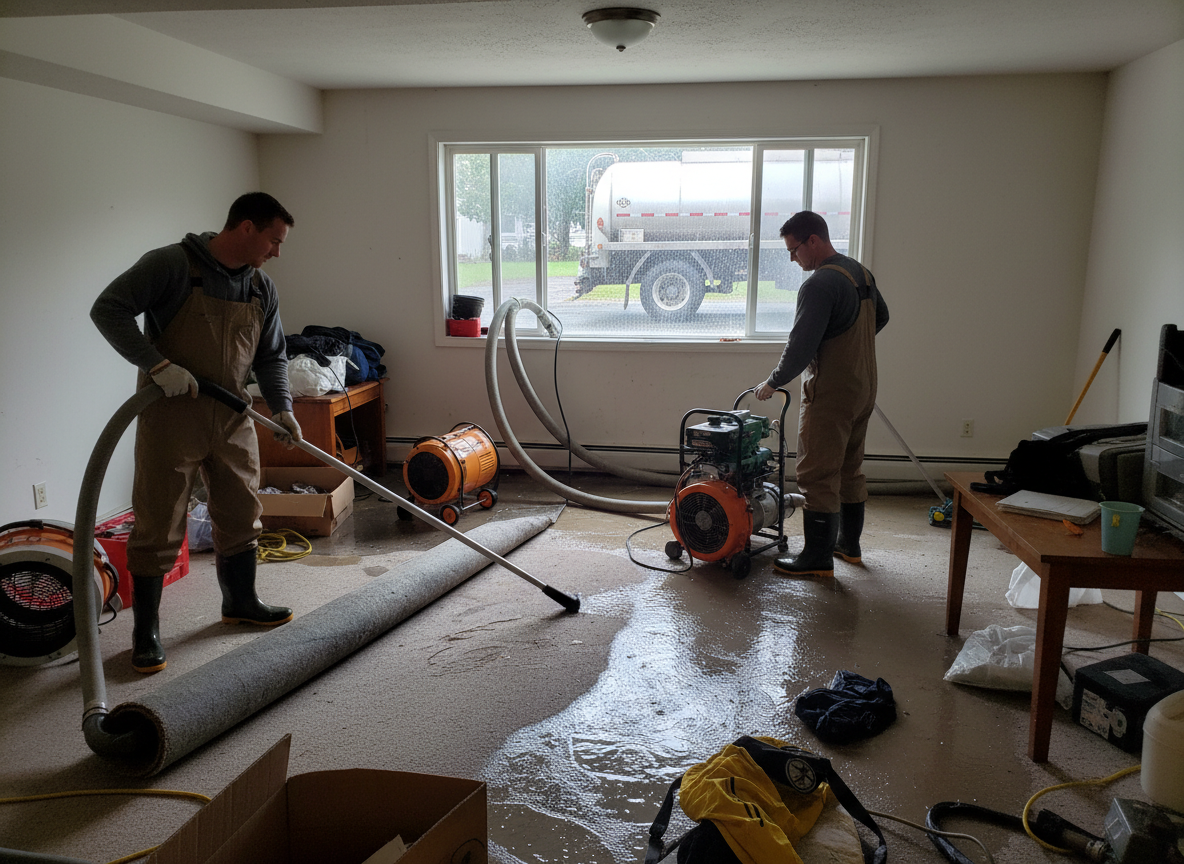
Camano Island homes often sit on crawl spaces or slabs close to Puget Sound, where winter rains and high tides push water under floors fast. Emergency water removal starts with locating the source—whether a roof leak in an older cedar-shake house or a failed sump in a waterfront property—then pulling standing water before it saturates insulation or subflooring. Hidden pockets in the island's clay-heavy soil can keep moisture trapped for days, so crews use moisture meters to map every affected joist rather than guessing.
Power outages are common during heavy Pacific Northwest storms, so portable generators and gas-powered pumps are standard on every Camano Island call. Removing water from finished basements in neighborhoods like Camano City requires careful separation of carpet and drywall to avoid spreading contaminants from septic systems that back up when drains overload. Technicians also watch for electrical hazards in older wiring common to 1970s and 1980s builds scattered across the island.
Once bulk water is gone, high-velocity air movers and dehumidifiers run continuously because Camano Island humidity rarely drops below 70 percent even in summer. Leaving any damp material behind almost always leads to mold within 48 hours, especially in the tight, poorly ventilated crawl spaces found in many hillside homes. Final verification includes checking under cabinets and behind appliances where water travels along the terrain's natural slope toward the Sound.
Technician insight
In Camano Island, the thing that catches most people out with Emergency water removal is how quickly water travels under the slab or through crawl spaces because of the island's clay soil and gentle slope toward the Sound—homeowners often think the floor is dry when hidden pockets are still feeding mold days later.
Crawl Space Flood After Heavy Rain
A Camano Island home near the east shore took on several inches of rainwater through a clogged perimeter drain. We found water had wicked into insulation and rim joists across half the crawl space. Portable pumps cleared the bulk water, then drying equipment ran for four days with daily readings until moisture levels matched the surrounding dry soil.
How it works
- 1
Arrival and Assessment
Technician arrives within the hour, maps water migration through the structure, and identifies electrical risks before starting extraction.
- 2
Water Extraction
Industrial pumps and vacuums remove standing water from floors, carpets, and cavities while protecting unaffected areas.
- 3
Drying and Monitoring
Air movers and dehumidifiers are placed; moisture readings are tracked daily until levels return to normal for the island climate.
- 4
Final Clearance
All equipment is removed only after documented dry readings and a walkthrough with the homeowner.
Pricing
Pricing varies by water volume, affected square footage, and number of days drying is required; upfront quotes given on site.