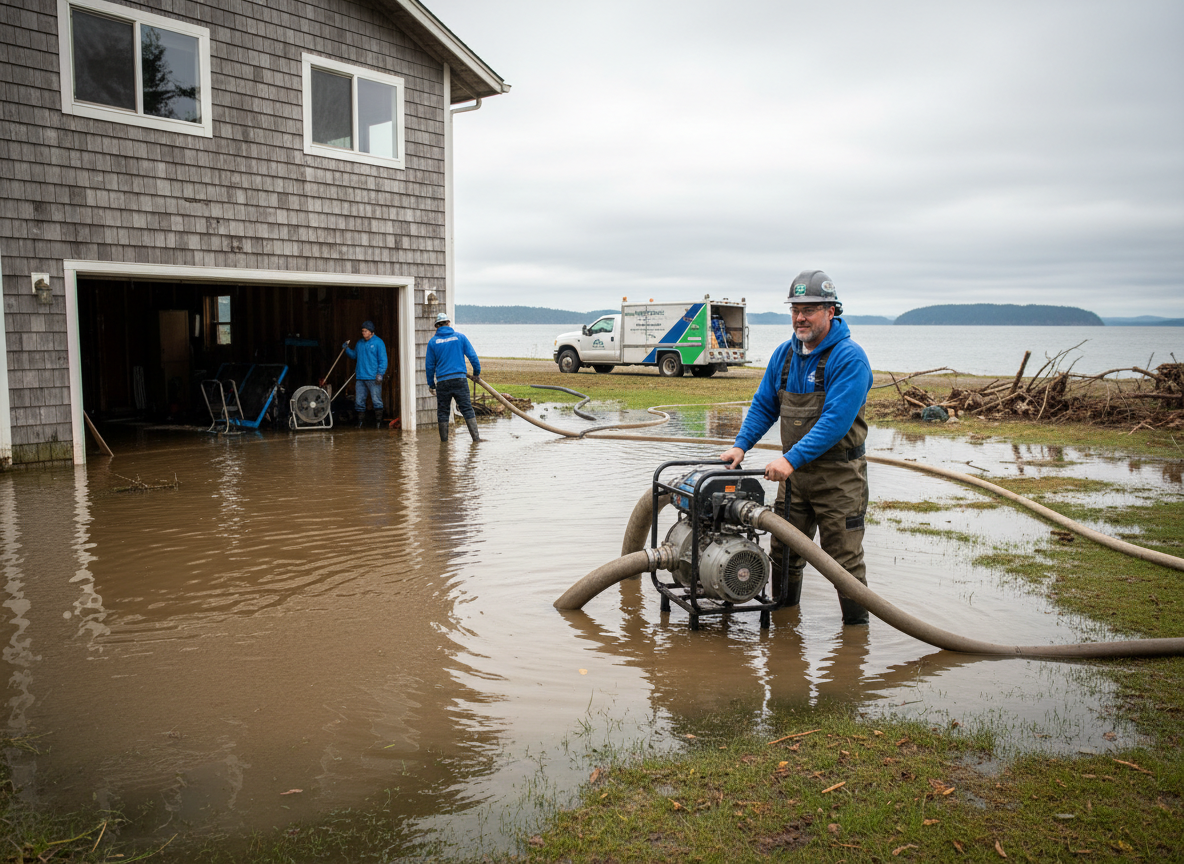
Flood restoration on Camano Island often involves older single-story homes with crawl spaces built near the shoreline. These structures can trap water under flooring and in wall cavities after heavy rain or tidal surges, requiring moisture mapping with infrared tools to locate pockets that standard drying fans miss. Homeowners frequently overlook insulation saturation in these older builds, which leads to secondary mold growth if not removed within the first 48 hours.
Island terrain creates runoff challenges along roads like N Sunrise Blvd where water pools against foundations during storms. Technicians must extract standing water quickly then deploy dehumidifiers sized for the square footage while monitoring relative humidity to prevent warping in hardwood floors common in Camano Island residences. Failure to address hidden moisture behind baseboards has caused repeat callbacks in multiple waterfront neighborhoods.
Regulatory considerations include proper disposal of contaminated materials when floodwater mixes with septic systems prevalent on the island. Work follows Washington state guidelines for handling Category 3 water, with documentation of every step for insurance claims. Crews document pre-existing conditions in homes built before modern waterproofing standards to avoid disputes later.
Post-extraction verification uses moisture meters on concrete slabs and subfloors to confirm drying targets are met before reconstruction begins. This step prevents callbacks when humidity rebounds in Camano Island's cooler marine air. Every job includes a final walkthrough with the homeowner to review affected areas.
Technician insight
In Camano Island, the thing that catches most people out with Flood restoration services is how water travels under pier-and-beam homes along the west side bluffs and sits in the insulation for weeks before anyone notices the smell.
Crawl space saturation after overnight rain
Water entered a Camano Island home through a low foundation vent during a storm. Inspection found saturated insulation and wet joists extending ten feet into the crawl space. Extraction and targeted drying were completed over three days with daily meter checks. The homeowner was able to begin floor repairs without further mold issues.
How it works
- 1
Initial Assessment
Technician arrives within hours, documents damage with photos and moisture readings across the affected Camano Island property.
- 2
Water Extraction
Standing water is removed using pumps and wands suited to the home's layout and flooring types.
- 3
Drying and Dehumidification
Industrial air movers and dehumidifiers are placed to pull moisture from walls, floors and crawl spaces.
- 4
Monitoring and Verification
Daily meter checks continue until readings meet industry dry standards before any rebuild work.
- 5
Final Cleanup
Equipment removal and site walkthrough confirm the space is ready for repairs or occupancy.
Pricing
Upfront quotes provided after inspection; final cost depends on water volume, affected square footage and drying duration.