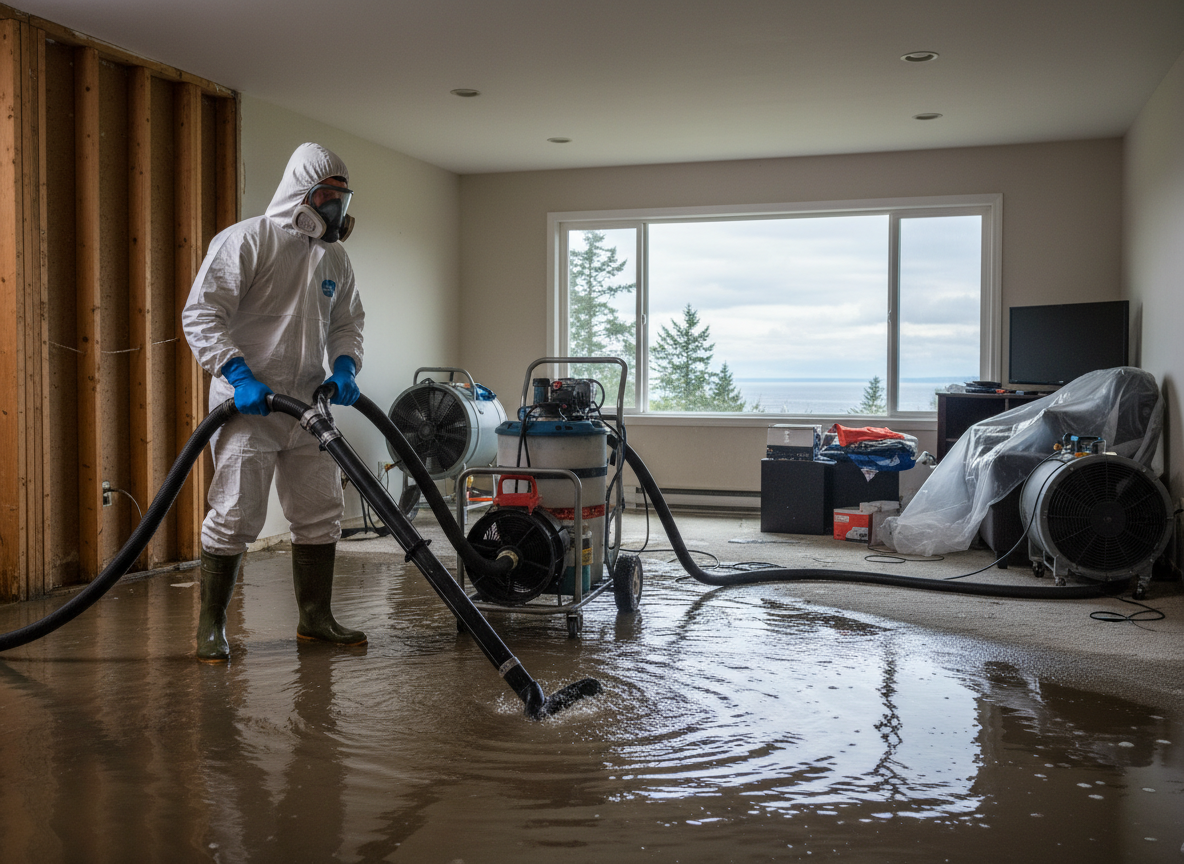
Camano Island homes, many built on crawl spaces or slabs from the 1970s onward, face repeated water intrusion during the long rainy season when groundwater rises and Puget Sound tides push moisture inland. Emergency water cleanup starts with rapid extraction using truck-mounted pumps to remove standing water before it migrates into subfloor insulation or wall cavities. Crews then place air movers and dehumidifiers sized for the square footage while monitoring moisture levels with meters to prevent hidden mold growth in older particleboard cabinets or under vinyl flooring common in the area.
Power outages during winter storms often leave sump pumps inactive, allowing water to back up from saturated soils near Utsalady and Maple Grove. Technicians prioritize shutting off electrical sources at the panel, then isolate wet zones to avoid spreading contaminants from flooded garages or utility rooms into living spaces. Because many Camano Island properties sit on clay-heavy terrain that holds water, drying times stretch longer than inland jobs, requiring daily return visits to adjust equipment and document progress for insurance adjusters.
After extraction, the focus shifts to preventing secondary damage in tight spaces like laundry rooms or under kitchen islands where leaks from appliances spread unseen. Teams document all affected materials so homeowners can decide on selective removal of baseboards or carpet padding rather than full replacement. Final walkthroughs verify that relative humidity has returned to normal levels before equipment is removed, reducing the chance of musty odors returning during the next heavy rain event.
Technician insight
In Camano Island, the thing that catches most people out with Emergency water cleanup is how clay soils and the high water table keep crawl spaces damp for weeks after the rain stops, especially in homes east of the highway where older vapor barriers have failed.
Crawl Space Flood After Heavy Rain
A homeowner on the east side near Utsalady called after overnight rain overwhelmed the perimeter drain. We found water had wicked up into subfloor insulation under the kitchen. Extraction and targeted drying prevented mold in the particleboard cabinets and restored normal moisture levels within four days.
How it works
- 1
Initial Assessment
Arrive on site, locate the water source, and map affected rooms while noting construction type and any electrical hazards.
- 2
Water Extraction
Remove standing water with portable and truck-mounted equipment, then extract trapped moisture from carpets and pads.
- 3
Drying and Monitoring
Position industrial drying equipment and check moisture readings daily until levels stabilize across all layers.
- 4
Final Documentation
Walk the property with the homeowner, note any remaining concerns, and provide a written summary for insurance.
Pricing
Upfront quotes provided after inspection; cost varies with water volume, affected square footage, and drying duration.