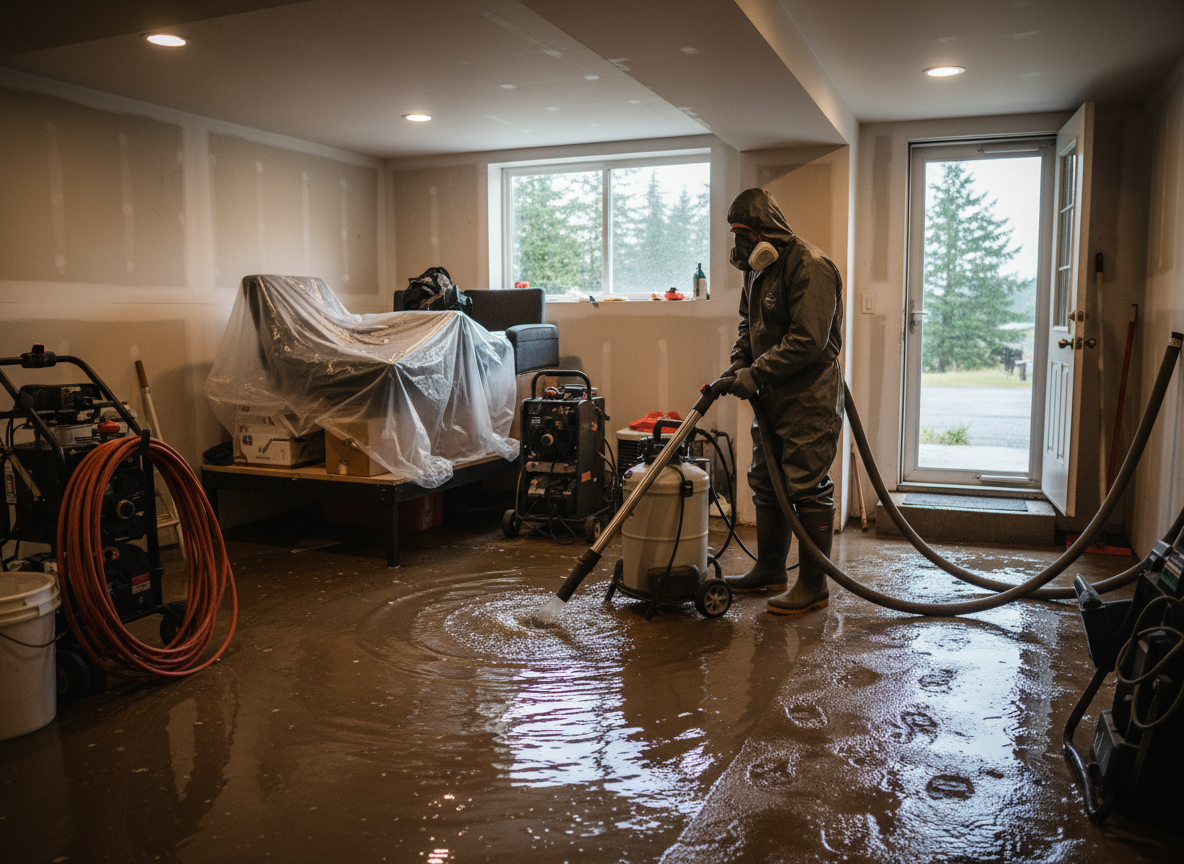
Basement flooding on Camano Island often stems from the area's heavy winter rainfall combined with a high water table and older homes built on slopes or near drainage swales. Many properties in neighborhoods around Camano City and Utsalady have concrete block foundations from the 1970s and 1980s that allow water to seep through cracks once the ground saturates. We begin by mapping the water source, whether it is surface runoff from the island's limited road ditches or groundwater pushing up through the slab, then extract standing water before it reaches electrical panels or HVAC equipment common in these lower levels.
After removal we use industrial air movers and dehumidifiers sized for the typical 800- to 1,200-square-foot basements found here, running them until moisture readings drop below 12 percent on both wood and concrete. Camano Island's cool, damp marine air slows natural drying, so we place equipment to create directed airflow around posts and under stairs where hidden moisture lingers. Homeowners frequently overlook the need to pull baseboards and drill weep holes in bottom plates; skipping this step lets mold colonies form inside wall cavities within days of the initial flood.
We also address the island-specific risk of septic backflow when heavy rain overwhelms drain fields. In these cases we isolate the affected plumbing, sanitize with EPA-registered disinfectants, and document moisture levels for insurance adjusters who visit from the mainland. Every job ends with a walkthrough so owners can see the dried surfaces and understand what steps, such as regrading the yard or adding French drains, will reduce the chance of repeat flooding during the next Pacific Northwest storm cycle.
Technician insight
In Camano Island, the thing that catches most people out with Basement flood cleanup is how quickly groundwater from the high water table re-enters once the pumps stop if the yard grading still slopes toward the foundation. Older homes around Utsalady often have no perimeter drain, so we have to explain that simply drying the basement without fixing the slope means the same water will return with the next heavy rain.
Camano City Basement After December Rain
A homeowner called after overnight rain pushed water through the foundation of a 1980s house near Camano City. We found six inches of water and elevated moisture behind the finished walls. Extraction and targeted drying prevented mold growth; we also advised adding a French drain along the uphill side of the lot to keep future runoff away from the house.
How it works
- 1
Initial Assessment
We arrive within hours, locate the water entry points, and document conditions with moisture meters before any equipment is placed.
- 2
Water Extraction
Truck-mounted pumps remove standing water while we protect unaffected areas and check for electrical hazards common in older Camano basements.
- 3
Drying and Monitoring
Air movers and dehumidifiers run until readings confirm the structure is dry, with daily checks to adjust placement around posts and under stairs.
- 4
Sanitizing and Final Walkthrough
We apply antimicrobial treatments where needed, reinstall removed trim, and review preventive steps with the homeowner before leaving.
Pricing
Pricing depends on water volume, affected square footage, and whether hidden wall cavities require opening; we provide an upfront scope before work begins.