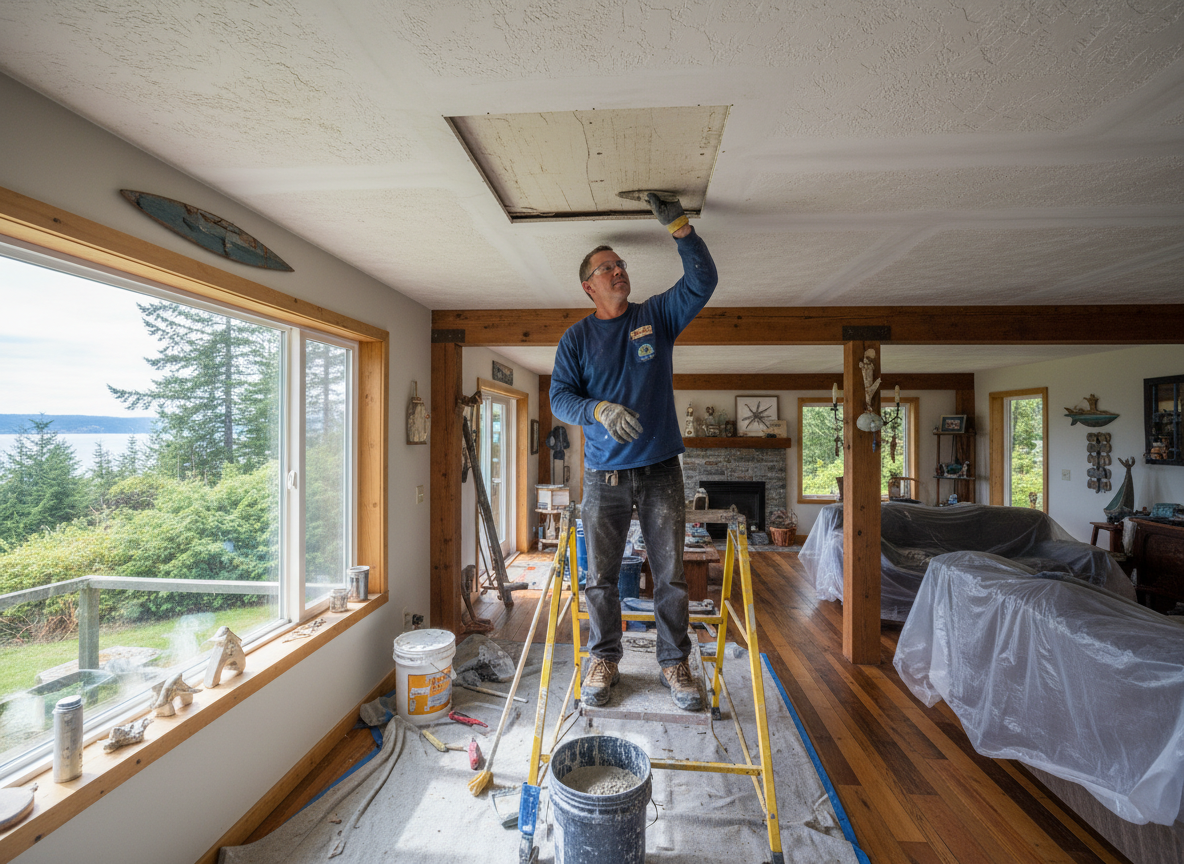
Ceiling water damage on Camano Island often stems from roof leaks in older single-story homes or second-floor plumbing issues in homes built near the shoreline. Plaster and lathe ceilings common in pre-1970s Island County construction hold moisture longer than modern drywall, allowing mold to develop behind the surface before visible stains appear. Technicians must cut access points carefully to avoid collapsing weakened sections while checking joist integrity and insulation saturation.
After stopping the water source, the focus shifts to drying the cavity with directed airflow equipment placed through small openings to limit disruption. In Camano Island's damp winters, trapped moisture can migrate along ceiling joists into adjacent rooms, requiring moisture meter checks in multiple directions. Replacement materials are matched to the original texture and thickness so the repair blends without obvious patches once painted.
Homeowners sometimes attempt surface painting or patching without addressing the source, which leads to recurring stains and hidden rot in the attic space above. Proper repair includes verifying that roof flashing, vent boots, and bathroom exhaust fans are intact, since these are frequent failure points in the island's wind-driven rain conditions. Final inspection confirms the ceiling plane is level and that no residual moisture remains in the framing.
Technician insight
In Camano Island the thing that catches most people out with ceiling water damage repair is the way wind-driven rain pushes water under older cedar shake roofs on homes near the bluff, letting it travel along rafters for months before it shows up as a stain directly below the leak point.
Sagging Ceiling After Winter Storms
A Camano Island homeowner reported a soft spot in the kitchen ceiling following several weeks of heavy rain. Inspection found water entering through deteriorated flashing around a skylight and traveling along the joists into the insulation. Crews opened a limited section, dried the cavity, replaced the affected drywall, and restored the original texture so the repair was invisible after painting.
How it works
- 1
Source Identification
Locate the leak origin through attic access or moisture mapping in Camano Island homes.
- 2
Containment and Drying
Isolate the area and use air movers to pull moisture from the ceiling cavity without full demolition.
- 3
Material Removal
Cut out saturated sections of drywall or plaster while preserving sound material for clean edges.
- 4
Repair and Finish
Install new material, blend texture, and confirm the ceiling is dry before any cosmetic work.
Pricing
Pricing depends on ceiling height, extent of hidden damage, and whether attic access is available; upfront quotes after inspection.