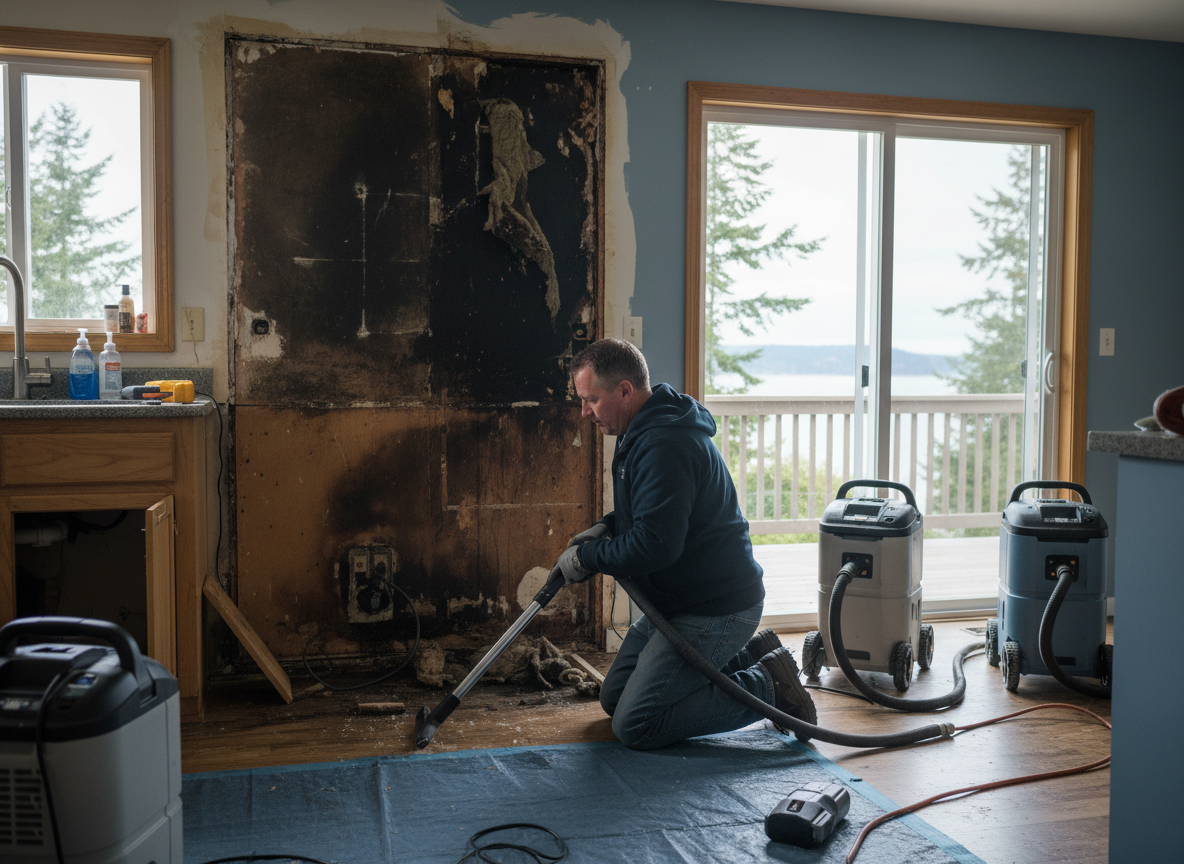
Camano Island homes often feature older wooden subfloors and tight cabinet layouts that trap moisture quickly after a kitchen leak. Water from a failed dishwasher hose or sink supply line can wick into particleboard bases and spread toward perimeter walls within hours, especially during the long rainy season when humidity stays elevated. Technicians remove baseboards, pull up affected vinyl or laminate, and use moisture meters to map hidden saturation before any drying equipment is placed.
Appliance-related failures are common here because many island properties still have original plumbing runs that have settled with the terrain. When a refrigerator ice-maker line bursts, water travels along the floor slope toward exterior doors or the crawlspace access. Extraction focuses on pulling water from under toe-kicks and behind the range, followed by targeted drying with low-profile air movers that fit the narrow kitchen footprint without blocking household traffic.
Once the source is isolated, antimicrobial treatment is applied to joists and cabinet interiors to prevent mold in the damp coastal climate. Replacement decisions depend on whether the particleboard core has delaminated; in many Camano Island kitchens the cabinets themselves can be saved if only the toe-kick and bottom shelf are affected. Final verification includes checking relative humidity in adjacent rooms to confirm the drying zone has not expanded.
Technician insight
In Camano Island the thing that catches most people out with kitchen water damage repair is how fast water travels under the toe-kick and into the particleboard subfloor once it hits the sloped floor common in homes built on the island's rolling terrain; by the time the homeowner notices, the damage has usually reached the crawlspace access point.
Dishwasher Leak Under Corner Cabinets
A homeowner on North Sunrise Boulevard noticed water pooling near the dishwasher at the end of a rainy week. Inspection showed the supply line had cracked and water had wicked under two runs of cabinets into the subfloor. We extracted the water, removed the toe-kicks, dried the joists, and reinstalled matching base trim without replacing the full cabinet run.
How it works
- 1
Source Identification
Locate the active leak from dishwasher, sink, or ice-maker line and shut off water at the nearest accessible valve.
- 2
Water Extraction
Remove standing water and pull saturated flooring or cabinet bases using moisture meters to define the full affected zone.
- 3
Drying and Monitoring
Place air movers and dehumidifiers sized for the kitchen layout, then log daily moisture readings until levels match unaffected rooms.
- 4
Sanitizing and Repair
Treat exposed wood and subfloor, then reinstall or replace damaged sections with materials matched to the home's existing finishes.
Pricing
Upfront quotes provided after inspection; cost varies with extent of subfloor involvement and whether cabinet bases require replacement.