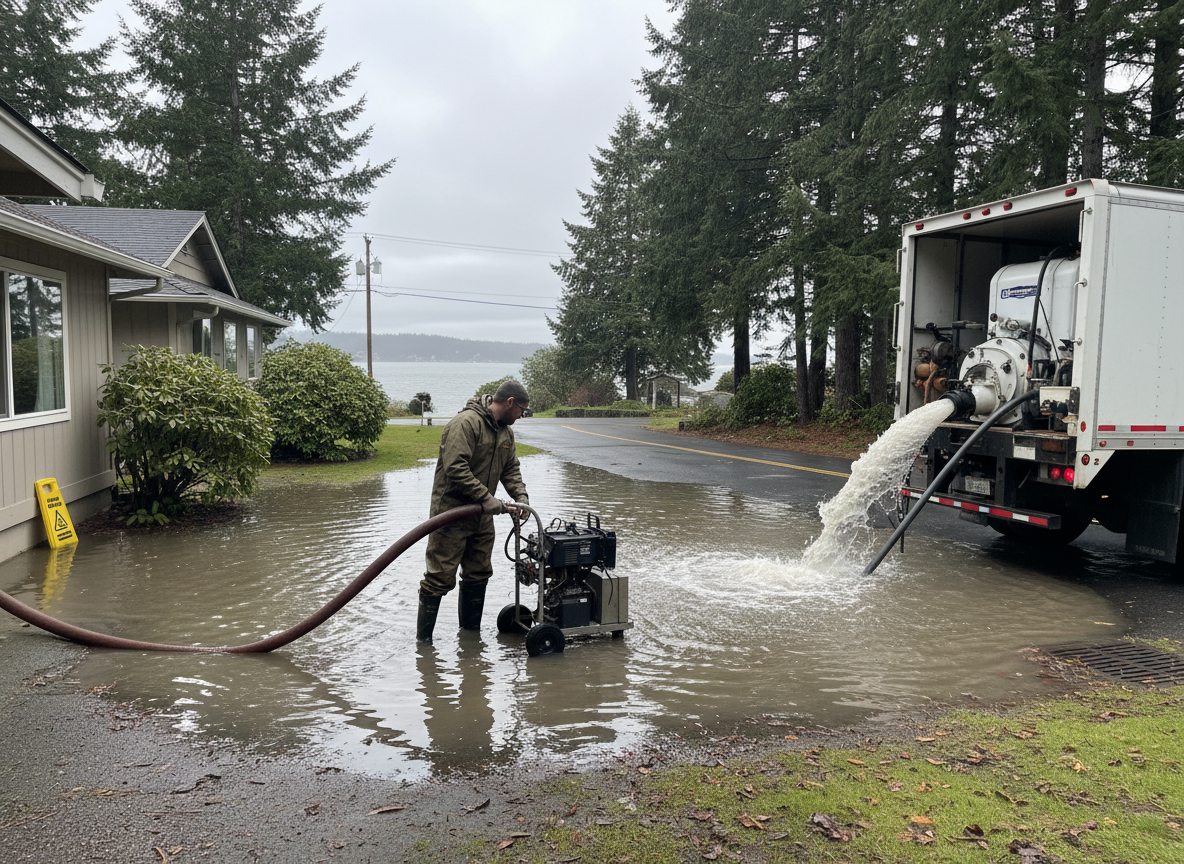
Rapid water extraction on Camano Island starts with pumps and extraction wands that pull water from carpets, hardwood, and subfloors before it migrates into wall cavities. Many homes here sit on older pier-and-beam foundations or slabs poured directly on grade, so water that pools against the foundation can wick upward through the concrete for days if extraction stops too soon. Crews check moisture levels in the crawl space and behind baseboards using meters rather than relying on visible dryness alone.
Island County winters bring repeated rain events that saturate yards and overwhelm French drains around Camano Island homes built before modern stormwater rules. Extraction teams often encounter water that has already reached electrical outlets or HVAC returns, requiring isolation of power before equipment can be placed. Delaying extraction even twelve hours lets tannins from local cedar siding stain drywall and makes odor removal far more difficult later.
Water that enters through failed roof flashings or sliding-glass doors on bluff-side properties travels along the slope of the lot and collects under cabinets and appliances. Extraction here means moving heavy furniture and appliances first, then running high-volume extractors in tight spaces where standard truck-mounted hoses cannot reach. Homeowners who attempt their own shop-vac removal usually leave enough residual moisture to support mold growth within forty-eight hours in the island’s humid marine air.
Technician insight
In Camano Island the thing that catches most people out with rapid water extraction is how the clay and glacial till under many lots holds water against the foundation for weeks. Homeowners see the floor dry and assume the job is done, but moisture stays trapped under the slab or in the rim joist area until we pull it with directed extraction.
Crawl-space water after heavy rain on North Camano
Water entered a 1970s home through a cracked foundation vent during a prolonged storm. Extraction crews found six inches of standing water under the living area and moisture readings above 40 percent in the rim joists. Portable pumps and wands removed the bulk water, then directed airflow dried the soil and framing before mold could establish.
How it works
- 1
Arrival and Safety Shutoff
Technicians arrive with pumps and meters, locate the water source, and shut off power to affected circuits before any equipment is placed.
- 2
Standing Water Removal
High-volume portable extractors pull water from floors and low areas, with hoses routed to exterior drains or tank trucks to avoid re-saturation of yards.
- 3
Moisture Mapping
Infrared cameras and pin meters locate hidden water in subfloors, walls, and crawl spaces common to Camano Island homes.
- 4
Initial Drying Setup
Air movers and dehumidifiers are positioned to begin drying immediately after extraction, with daily monitoring scheduled.
Pricing
Cost depends on volume of water, number of affected rooms, and whether crawl-space or slab work is required; 24/7 response included.