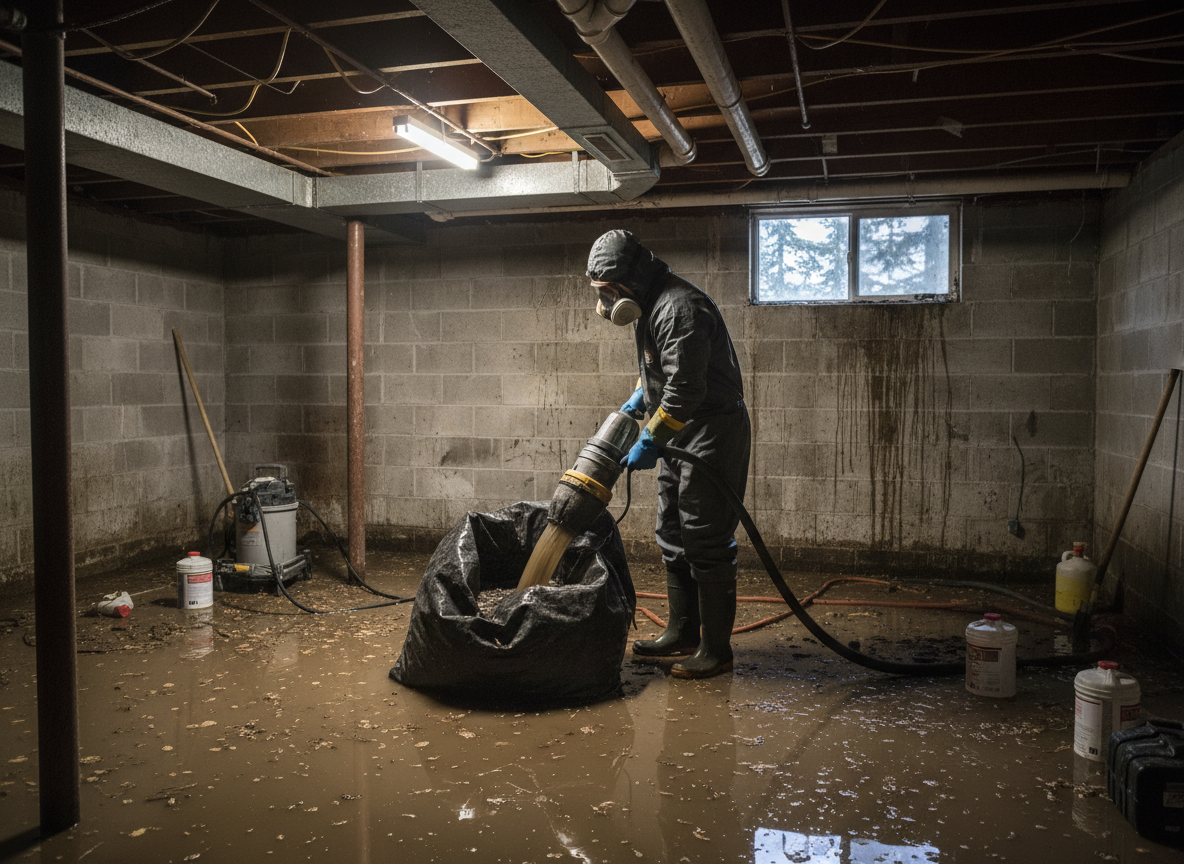
Sewage cleanup on Camano Island often involves older waterfront homes where septic systems tie into clay soils that retain moisture long after the initial spill. Technicians must isolate affected zones quickly because the island's limited road access can delay equipment arrival during winter storms. Contaminated materials like hardwood floors and drywall in 1970s-era cottages require full removal rather than drying attempts, since bacteria penetrate porous surfaces fast in the damp marine air. Proper disposal follows Island County health rules, with all waste tracked from the job site to approved facilities.
Edge cases appear regularly when tidal surges push raw sewage back through floor drains in low-lying neighborhoods near Utsalady Bay. Crews use negative air machines and antimicrobial agents rated for Category 3 water, then document moisture levels at multiple depths in the slab to prevent hidden mold growth weeks later. Homeowners sometimes attempt their own cleanup with household fans, which spreads aerosols and violates safety protocols for fecal coliform exposure.
Code compliance means notifying Island County Environmental Health when sewage reaches living spaces, especially in homes built before modern septic setbacks. Technicians test for hidden saturation behind toe-kicks and in crawl spaces common under Camano Island ramblers, then provide written clearance reports once readings drop below acceptable thresholds.
Technician insight
In Camano Island, the thing that catches most people out with sewage cleanup is how quickly the island's heavy clay soils and older septic laterals let contamination wick under slab foundations in homes built before 1990. Homeowners often focus only on the visible floor and miss the moisture trapped in the subfloor that shows up as musty odors months later.
Septic Backup in Utsalady Home
A kitchen drain backed up after heavy rain pushed water through an aging septic line. We found sewage had reached the crawl space and wicked into joists under the 1980s addition. We extracted the water, removed saturated insulation, treated all surfaces, and dried the space over four days until readings stayed below 12 percent.
How it works
- 1
Emergency Assessment
Arrive on site within hours, identify the sewage source, and map all affected rooms while protecting unaffected areas.
- 2
Containment and Extraction
Set up barriers and use truck-mounted pumps to remove standing water and solids before odors spread through the home.
- 3
Removal of Contaminated Materials
Cut out and bag saturated drywall, carpet, and insulation following biohazard handling procedures.
- 4
Cleaning and Drying
Apply EPA-registered disinfectants, then run industrial dehumidifiers and air movers until moisture meters confirm safe levels.
- 5
Final Clearance
Conduct post-remediation testing and supply documentation for insurance and county records.
Pricing
Pricing depends on volume of water, number of rooms affected, and whether structural materials must be removed; we provide an upfront scope before work begins.