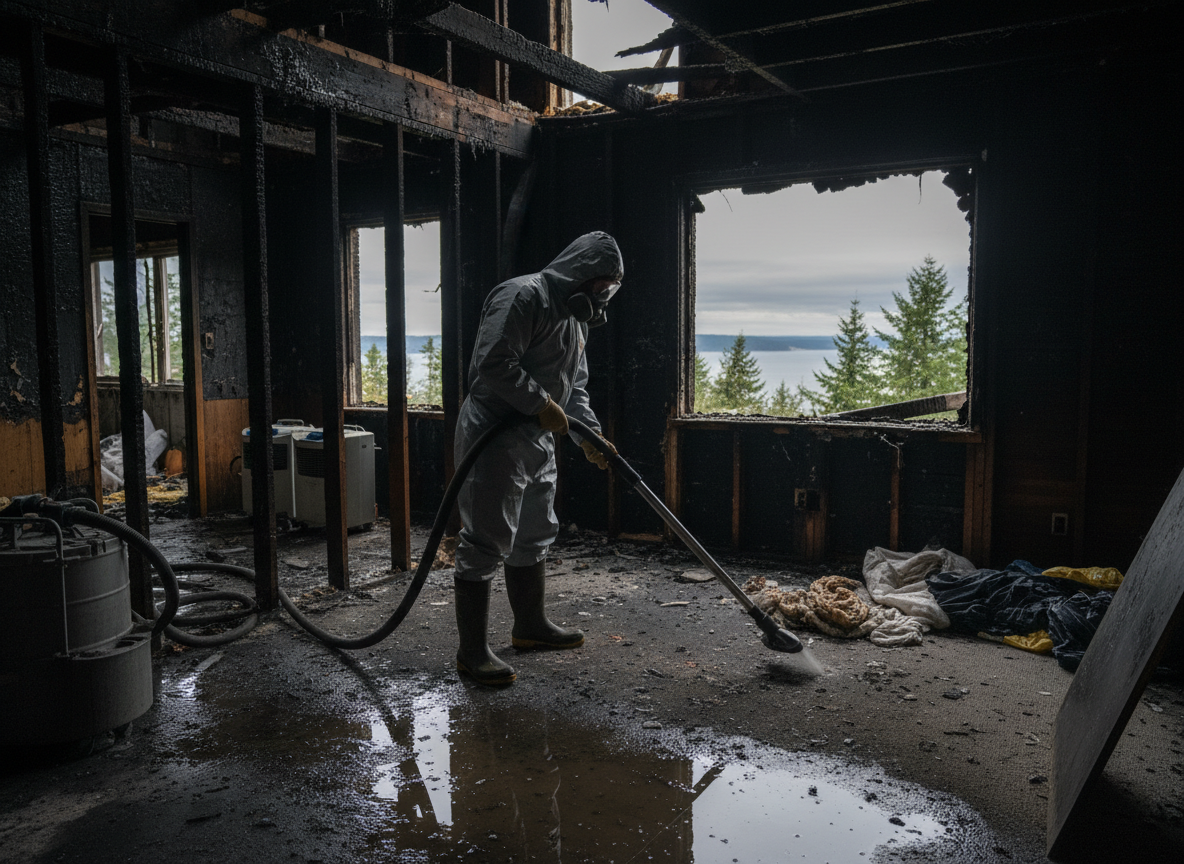
Firefighting water on Camano Island often saturates older cedar-shake and wood-frame homes common along the island's ridges and waterfront. The combination of smoke residue and standing water quickly drives moisture into subfloors, wall cavities and insulation, where it lingers because of the area's frequent marine air and limited sun exposure in winter. Technicians must map moisture with meters and infrared cameras before any demolition, because cutting too soon can spread soot or leave pockets that later grow mold.
Extraction begins with pumps and wands rated for Category 3 water, followed by industrial air movers and low-grain dehumidifiers staged in contained zones. On Camano Island properties, power can be unreliable after a fire, so crews bring generators and monitor amperage draw to avoid tripping island circuits. Drying goals are set at 10-12 percent moisture content for dimensional lumber and under 1 percent for concrete slabs; reaching those numbers often takes longer here than on the mainland because of higher ambient humidity.
Once dry, affected materials are removed and surfaces are cleaned of acidic soot that can corrode wiring and HVAC components. Final clearance includes post-remediation moisture logs and, when required, air sampling before reconstruction begins. Homeowners receive daily written updates and photos so they can coordinate with insurance adjusters without repeated site visits.
Technician insight
In Camano Island the thing that catches most people out with water damage remediation after fire is how marine humidity and older cedar construction trap moisture in wall cavities long after the fire is out; if crews skip extended dehumidification cycles the wood never drops below mold-risk levels and the job has to be reopened weeks later.
Suppression Water in a Ridge-Top Home
After a kitchen fire, suppression water had migrated through the floor into the crawlspace of a 1970s cedar home near Elger Bay. Meters showed elevated moisture in joists and insulation that visual inspection missed. Crews extracted water, ran contained drying for six days, removed saturated materials, and provided daily logs that satisfied the insurer without further demolition.
How it works
- 1
Emergency Assessment
Technicians arrive within hours, document all water migration paths, and test for hidden moisture in walls, floors and ceilings using meters and thermal imaging.
- 2
Water Extraction
Standing water is removed with pumps and extraction wands; Category 3 protocols are followed when firefighting runoff has contacted contaminants.
- 3
Drying and Dehumidification
Air movers and dehumidifiers are placed in contained zones and run until moisture readings meet industry standards for the island's climate.
- 4
Soot and Residue Removal
Affected surfaces are cleaned and treated to neutralize acidic smoke residue before any rebuilding or refinishing occurs.
- 5
Documentation and Clearance
Moisture logs, photos and final readings are provided for insurance and homeowner records before the site is released for repairs.
Pricing
Cost depends on square footage affected, depth of water penetration, and drying duration required by local humidity; upfront quotes are provided after on-site assessment.