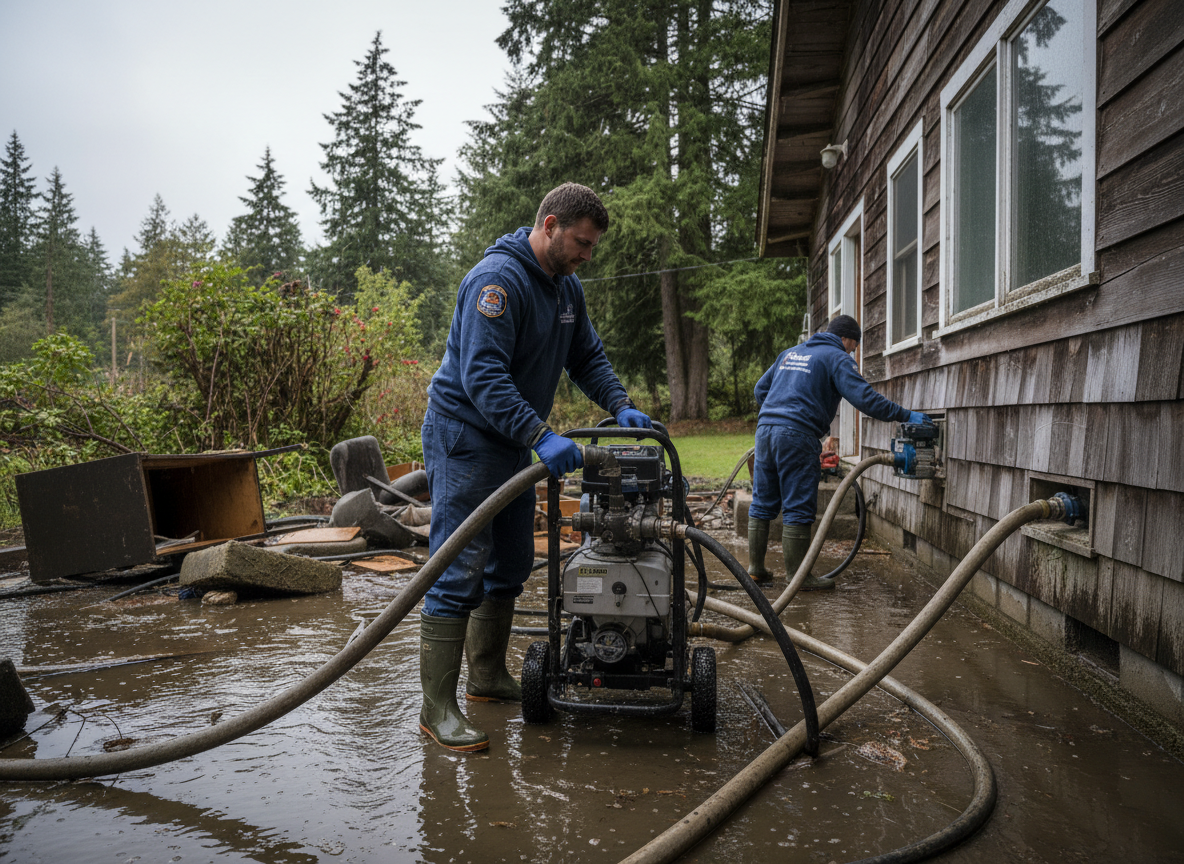
Water extraction on Camano Island starts with locating the source and isolating affected zones before pumps and vacuums are brought in. Older homes built on concrete slabs or with crawlspaces over clay-heavy soil often trap water under flooring, and the frequent winter rains push groundwater higher, making complete removal slower than in drier regions. Technicians map moisture with meters rather than relying on visible signs alone because hidden saturation in subfloors leads to mold if left behind.
Portable extractors and truck-mounted units handle different volumes; slab homes near the east side of the island require more attention to perimeter drainage because runoff from higher ground flows toward foundations. Crews work in sections to avoid spreading contaminants, especially when sewage or gray water is involved. Every job ends with a drying plan that accounts for the marine air, which slows evaporation compared with inland areas.
Homeowners sometimes attempt extraction with shop vacs, but those units cannot pull water from under glued-down carpet or from joist cavities common in Camano Island construction. Professional equipment reaches those pockets and records moisture levels for insurance documentation. Leaving even small amounts of water behind creates long-term issues once humidity rises again during the next storm cycle.
Technician insight
In Camano Island, the thing that catches most people out with water extraction is the clay layer under many older crawlspaces near the shoreline; water sits there for weeks after the rain stops and standard pumps miss it entirely unless you dig small relief trenches.
Crawlspace saturation after winter storm
Water entered a 1970s home on the west side through a cracked foundation vent during heavy rain. Extraction revealed pooled water trapped above the clay subsoil. Crews used narrow wands to reach under joists and installed temporary channels to drain the lowest pocket. Moisture readings dropped to acceptable levels within four days and the homeowner avoided mold remediation.
How it works
- 1
Arrival and Assessment
Technician arrives within the service window, identifies the water source, and measures affected square footage and depth.
- 2
Containment Setup
Plastic barriers and negative air are placed to stop migration into unaffected rooms or HVAC systems.
- 3
Extraction Phase
Pumps and extraction wands remove standing and trapped water from floors, carpets, and subfloor cavities.
- 4
Moisture Verification
Meters confirm remaining moisture levels in walls, baseboards, and underlayment before equipment is removed.
Pricing
Cost depends on water volume, access difficulty, and whether sewage is present; estimates given on site before work begins.